As autonomous vehicle technology matures, the traditional taxi model becomes insufficient to address the evolving demands of urban life. The future of mobility is not simply about driverless cars, but about intelligent, adaptive transportation services capable of responding dynamically to context, purpose, and demand.
Cities require mobility solutions that go beyond transporting people from point A to point B. Consumers, businesses, schools, and service providers increasingly need vehicles that adjust to what is being transported, not just who. A delivery after a shopping experience, a scheduled service, a logistics task, or a shared ride all demand different vehicle capacities, timing, and configurations.
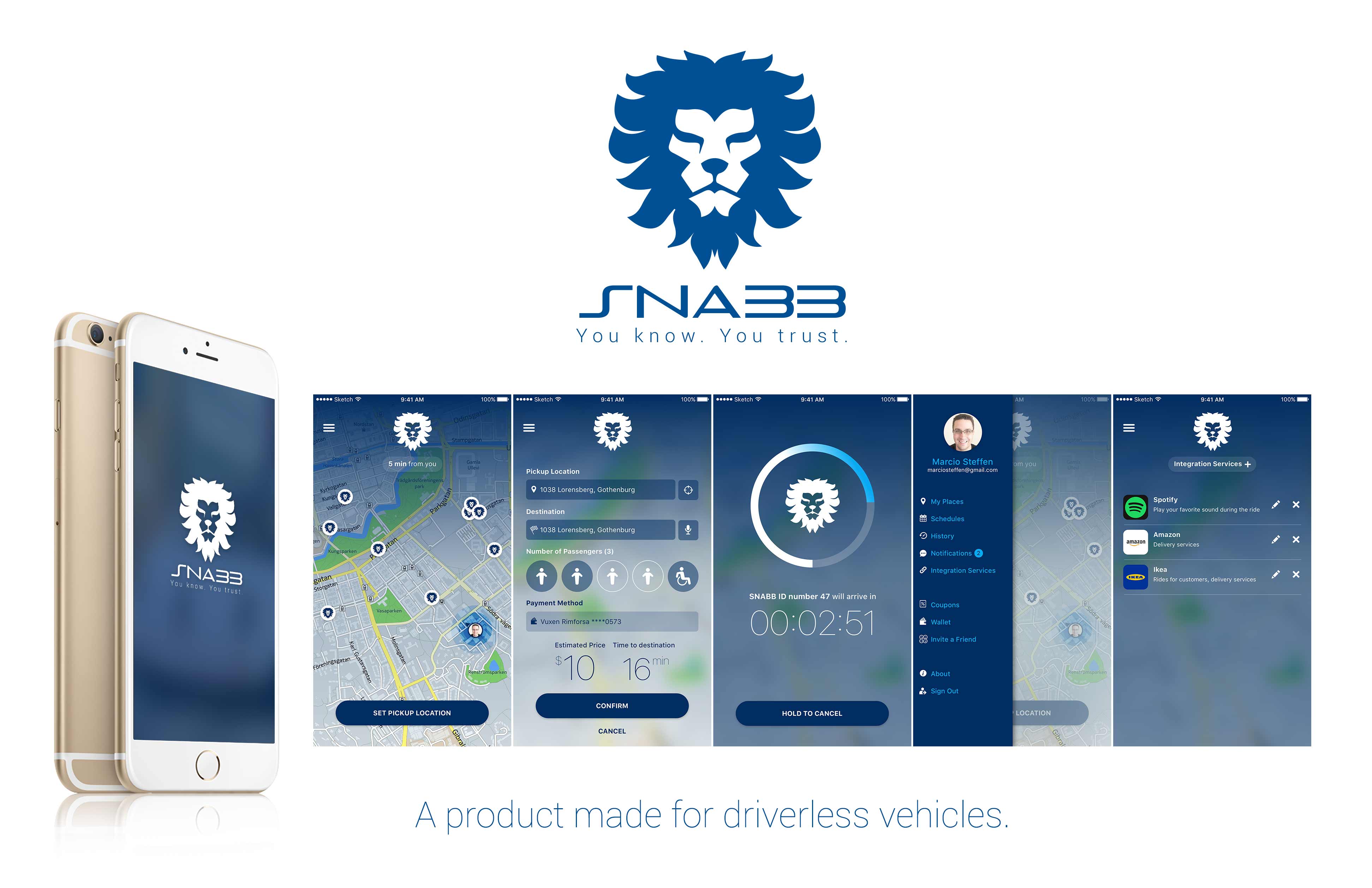
The core challenge is the lack of a unified digital platform capable of orchestrating autonomous vehicles as a service ecosystem. Current solutions treat autonomous cars as isolated innovations rather than components of a broader, API-driven mobility infrastructure. There is a clear need for a mobile application that intelligently connects real-time data, purchase context, destination requirements, and vehicle availability to deliver the right vehicle, at the right size, for the right purpose.
In this vision, mobility becomes contextual. For example, during a checkout experience in a physical or digital store, the platform must be able to access purchase data through integrated APIs, calculate volume and destination, and automatically dispatch an autonomous vehicle tailored to that specific need. The same platform must also support scheduling, logistics, and on-demand services across multiple industries through a single, seamless interface.
The need, therefore, is to create an intelligent mobility platform for autonomous vehicles, one that transforms driverless cars into flexible, scalable services. Such a platform simplifies daily life, reduces inefficiencies, and enables a new generation of urban services where transportation dynamically adapts to human activity rather than forcing humans to adapt to transportation.