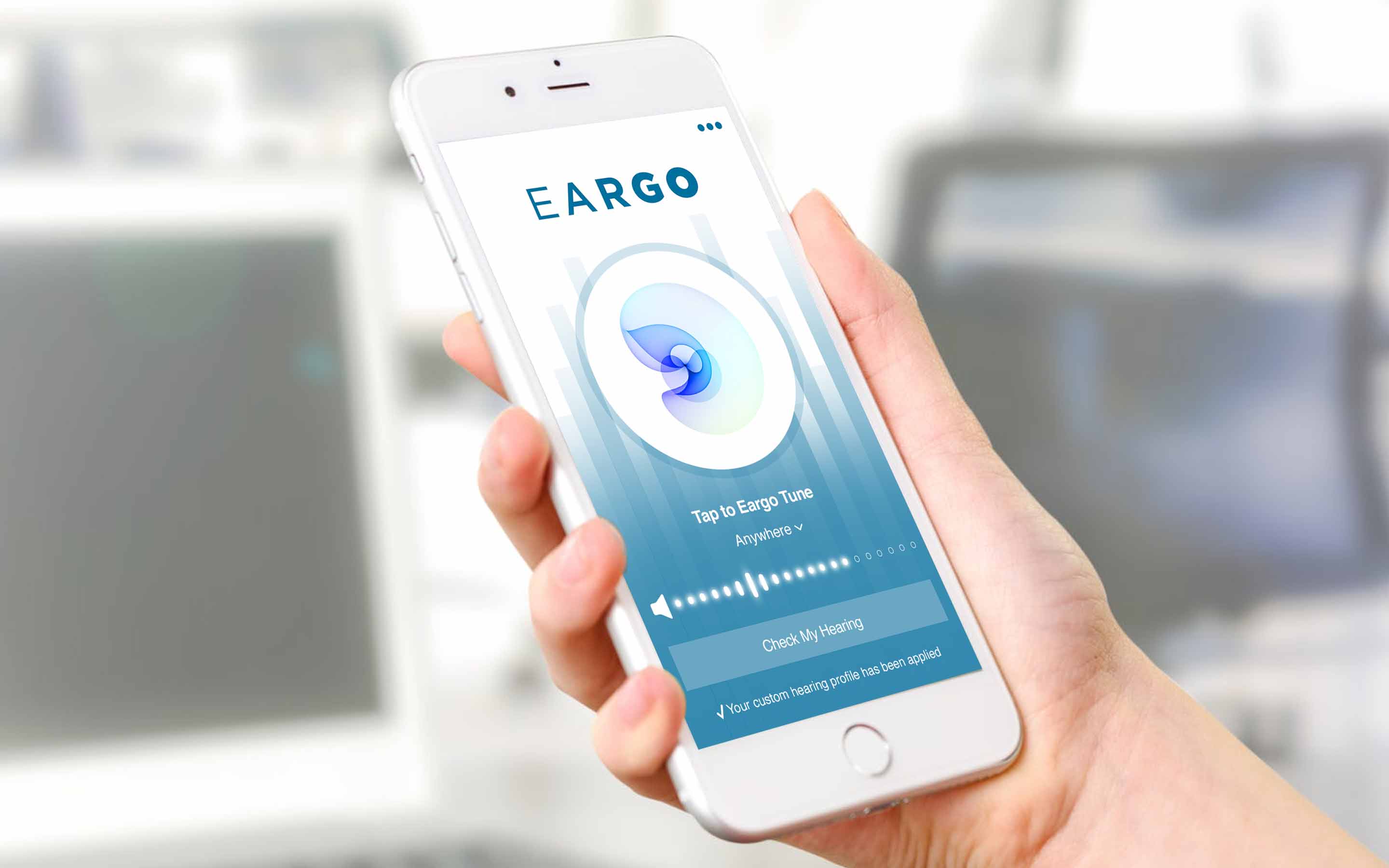
Hearing limitations and long-distance sound perception present significant challenges in both everyday life and high-risk environments. Individuals with hearing impairments often struggle to capture distant or low-volume sounds, while security and intelligence scenarios require precise audio amplification to detect conversations and acoustic signals beyond normal human range.
The core need was to create a single, intuitive digital interface capable of supporting these diverse use cases without adding complexity. Whether assisting people with hearing disabilities or enabling sound amplification in high-security contexts, the experience had to be immediate, discreet, and easy to operate under pressure.
Traditional solutions relied on fragmented controls, multiple screens, or specialized hardware configurations, increasing cognitive load and limiting usability. There was a clear need for a one-screen experience that centralized control, visualization, and feedback, allowing users to focus on listening rather than managing the technology.
Ultimately, the need was to design an application that transforms advanced audio amplification technology into an accessible, efficient, and reliable experience. By simplifying interaction while supporting sensitive and mission-critical scenarios, the solution bridges accessibility, safety, and precision in sound perception.
My Role and Key Results
My responsibilities:
• Led product strategy and experience definition for an advanced audio amplification application, balancing accessibility needs with mission-critical, high-security use cases.
• Designed the end-to-end user experience, UI, and interaction model, focusing on a single-screen interface optimized for speed, clarity, and low cognitive load.
• Translated complex audio amplification and signal control into intuitive, user-centered interactions suitable for both everyday and high-pressure environments.
• Drove stakeholder validation across product, design, and technical teams to ensure usability, reliability, and operational readiness.
• Provided art direction and design leadership, ensuring consistency, precision, and trust in an experience where accuracy and discretion were critical.
Results Achieved:
• Delivered a single-screen, intuitive mobile interface, centralizing control and feedback for advanced audio amplification.
• Significantly reduced cognitive load, allowing users to focus on listening rather than managing complex controls or configurations.
• Enabled fast and discreet operation, supporting both accessibility use cases and high-pressure, mission-critical scenarios.
• Improved usability and reliability in long-distance sound perception, enhancing safety, awareness, and precision.
• Bridged accessibility and advanced audio technology, transforming complex amplification capabilities into a practical, user-centered experience.
Technology and Skills
Product Strategy, User Experience, User Interface, Usability, Interaction Design, Art Direction