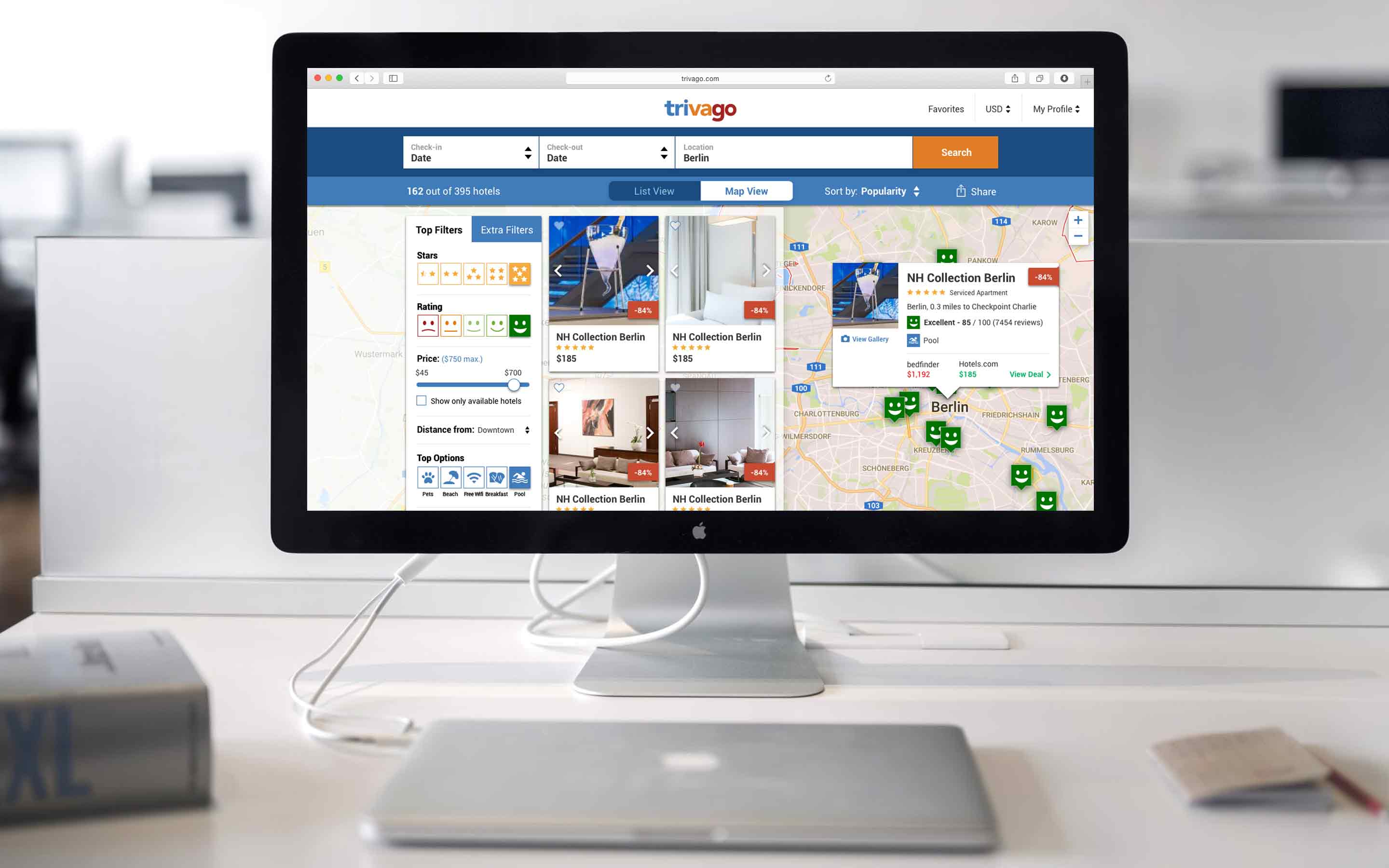
As digital travel platforms scale globally, users expect clarity, speed, and consistency across devices and interaction contexts. For map-based experiences in particular, usability challenges increase significantly as information density grows and screen sizes vary. Poor visual hierarchy, unclear interactions, or inconsistent responsive behavior can quickly lead to confusion, friction, and disengagement.
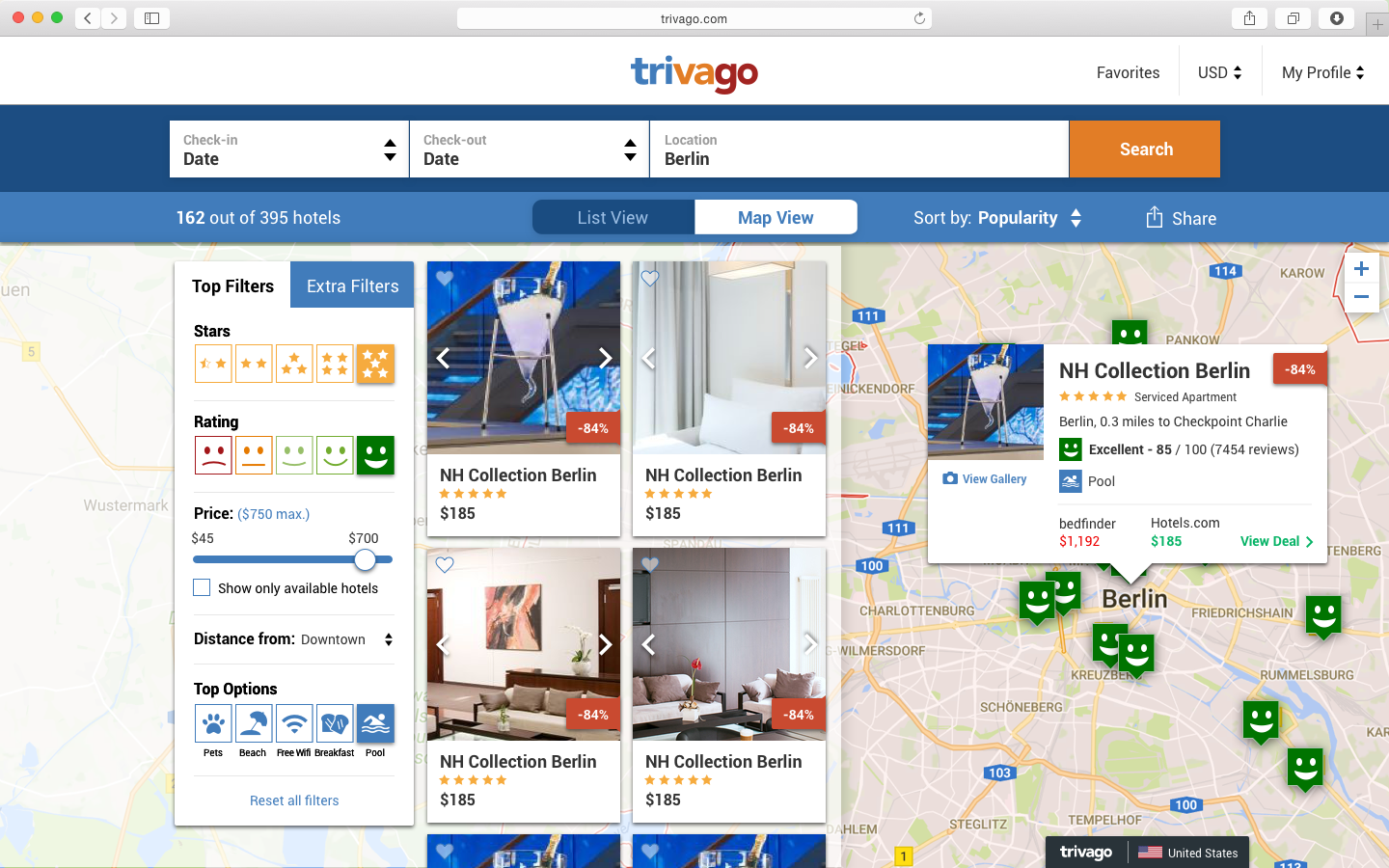
For Trivago, the challenge was to ensure that the map view, a critical decision-making interface for travelers, delivered an intuitive and visually coherent experience across desktop, tablet, and mobile environments. Users needed to explore locations, compare options, and interact with complex spatial data without cognitive overload.
There was a clear need to define a robust visual language that unified UX, UI, and interaction design principles, enabling seamless navigation, clear affordances, and responsive adaptability. This visual system had to balance aesthetics with usability, ensuring that interactions felt natural while preserving performance and clarity at scale.
Ultimately, the need was to transform the map experience into a user-centered, responsive, and visually consistent interface, empowering users to make confident decisions while interacting effortlessly with complex travel data.
My Role and Key Results
My responsibilities:
• Led the definition of product and design strategy for Trivago’s map experience, aligning business goals, user needs, and platform scalability.
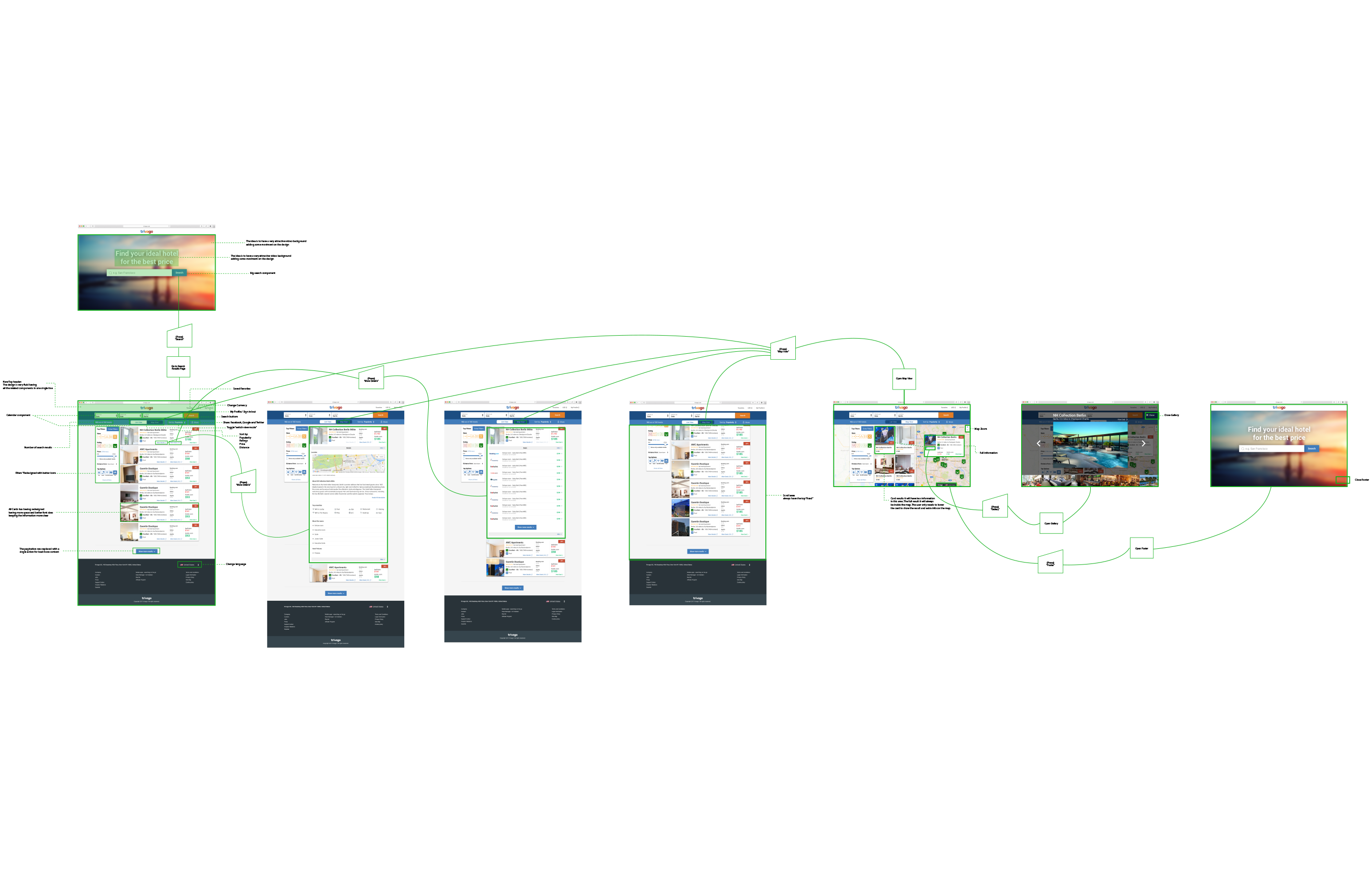
• Defined and governed a unified visual, UX, and interaction language for map-based experiences across desktop, tablet, and mobile.
• Drove stakeholder alignment and design validation, ensuring consistency between product vision, user expectations, and technical constraints.
• Owned end-to-end UX, UI, interaction design, and art direction, translating complex spatial data into intuitive, high-performance interfaces.
• Partnered with engineering teams to ensure responsive behavior, performance optimization, and usability at scale for high-density map interactions.
Results Achieved:
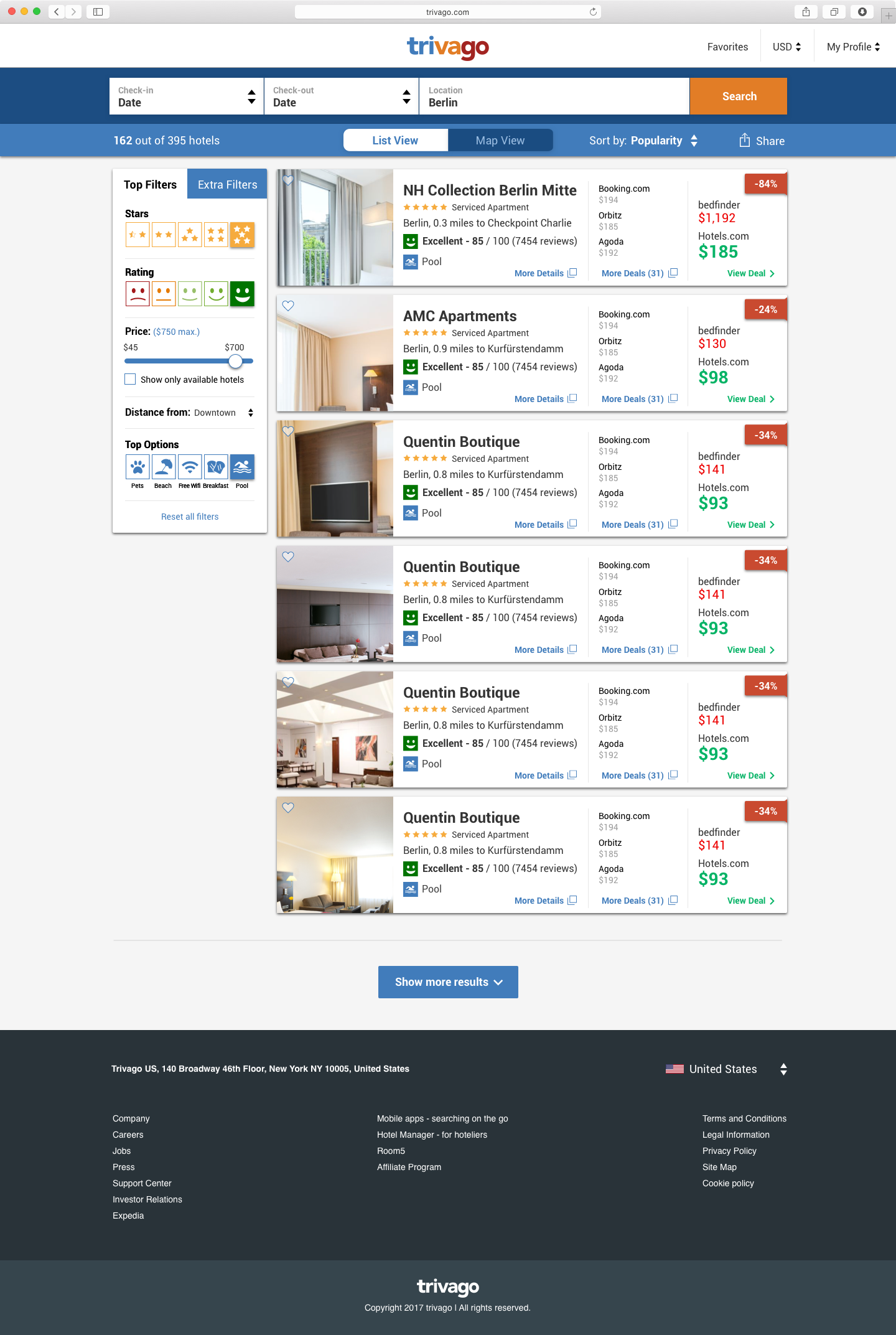
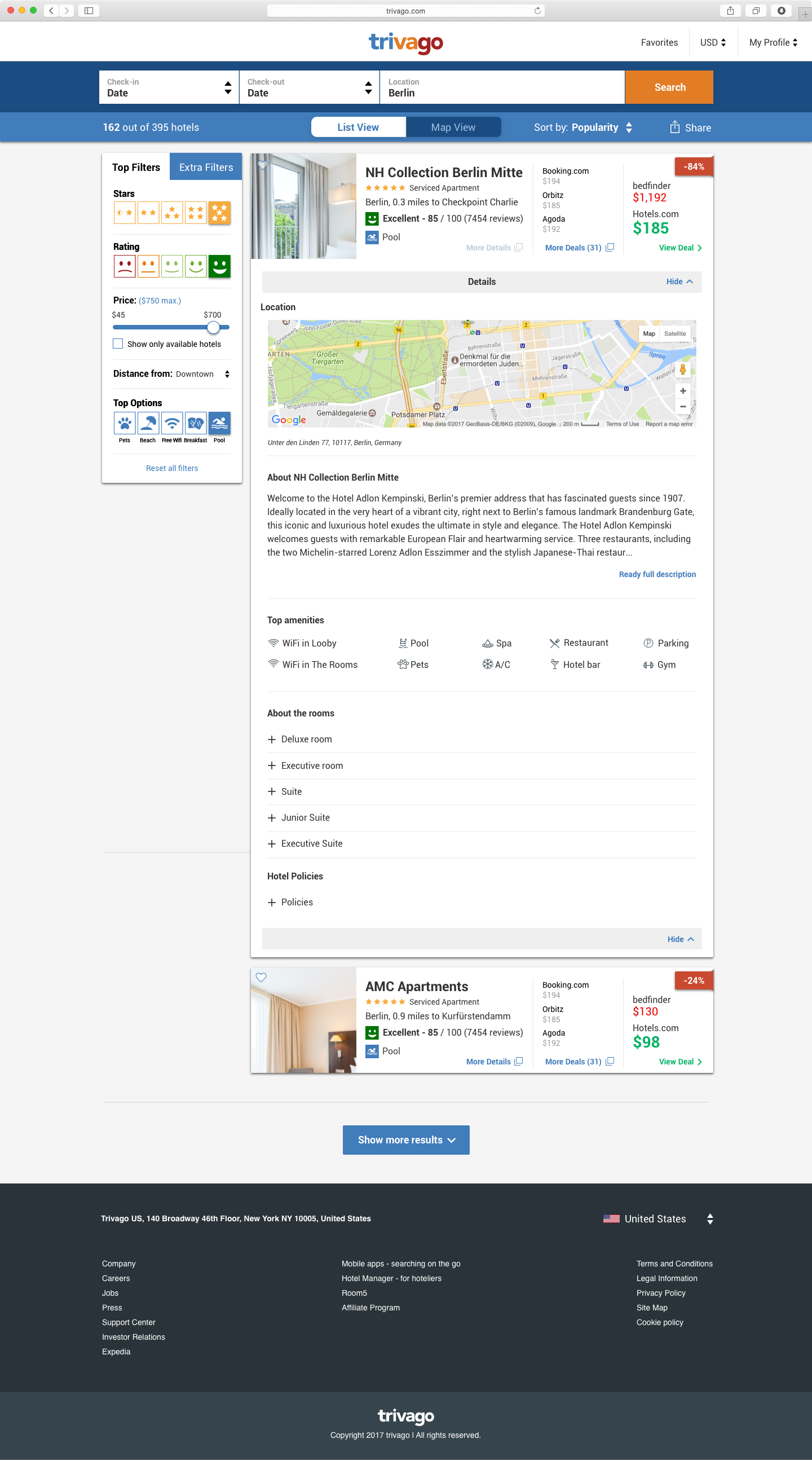
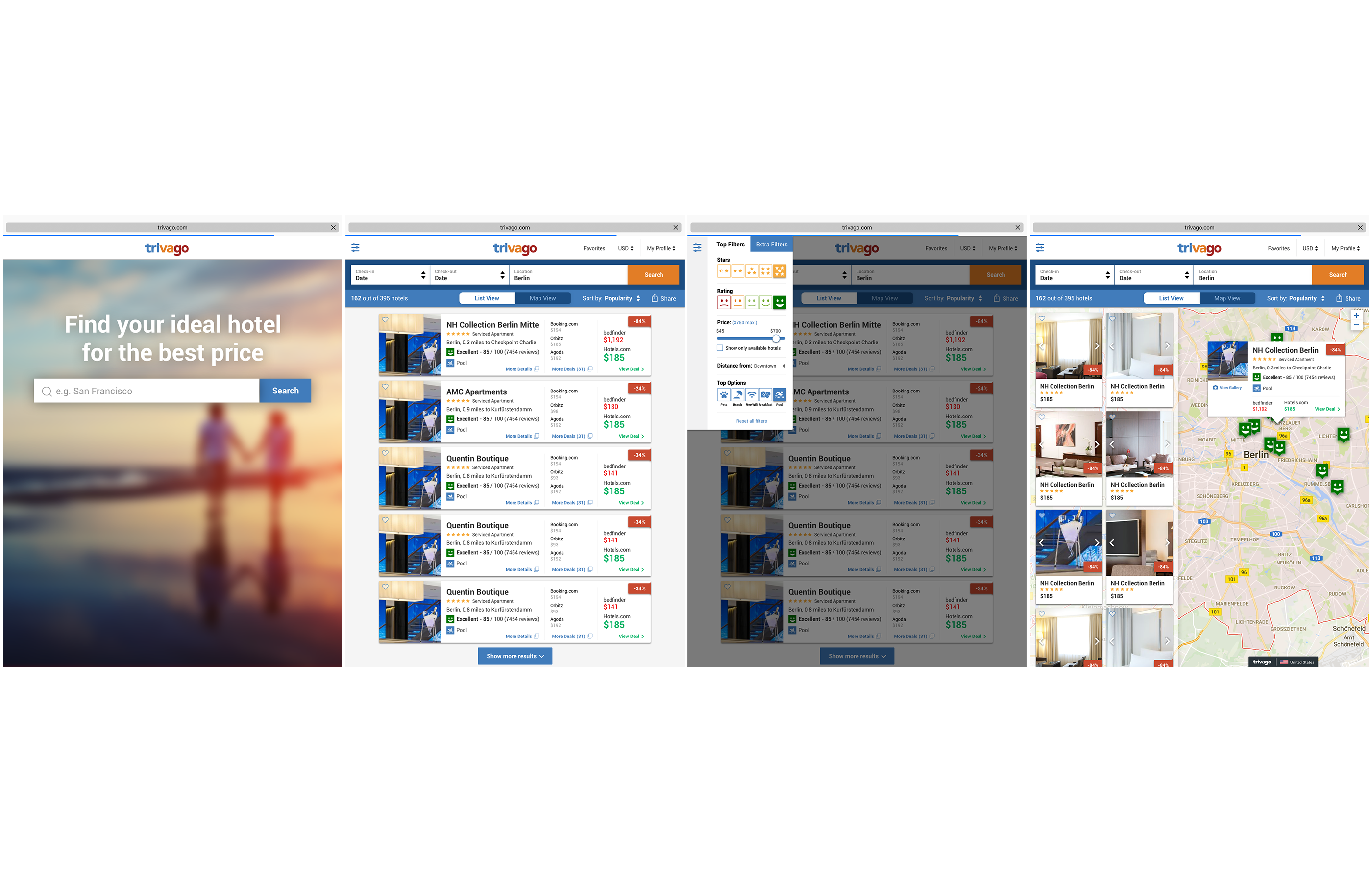
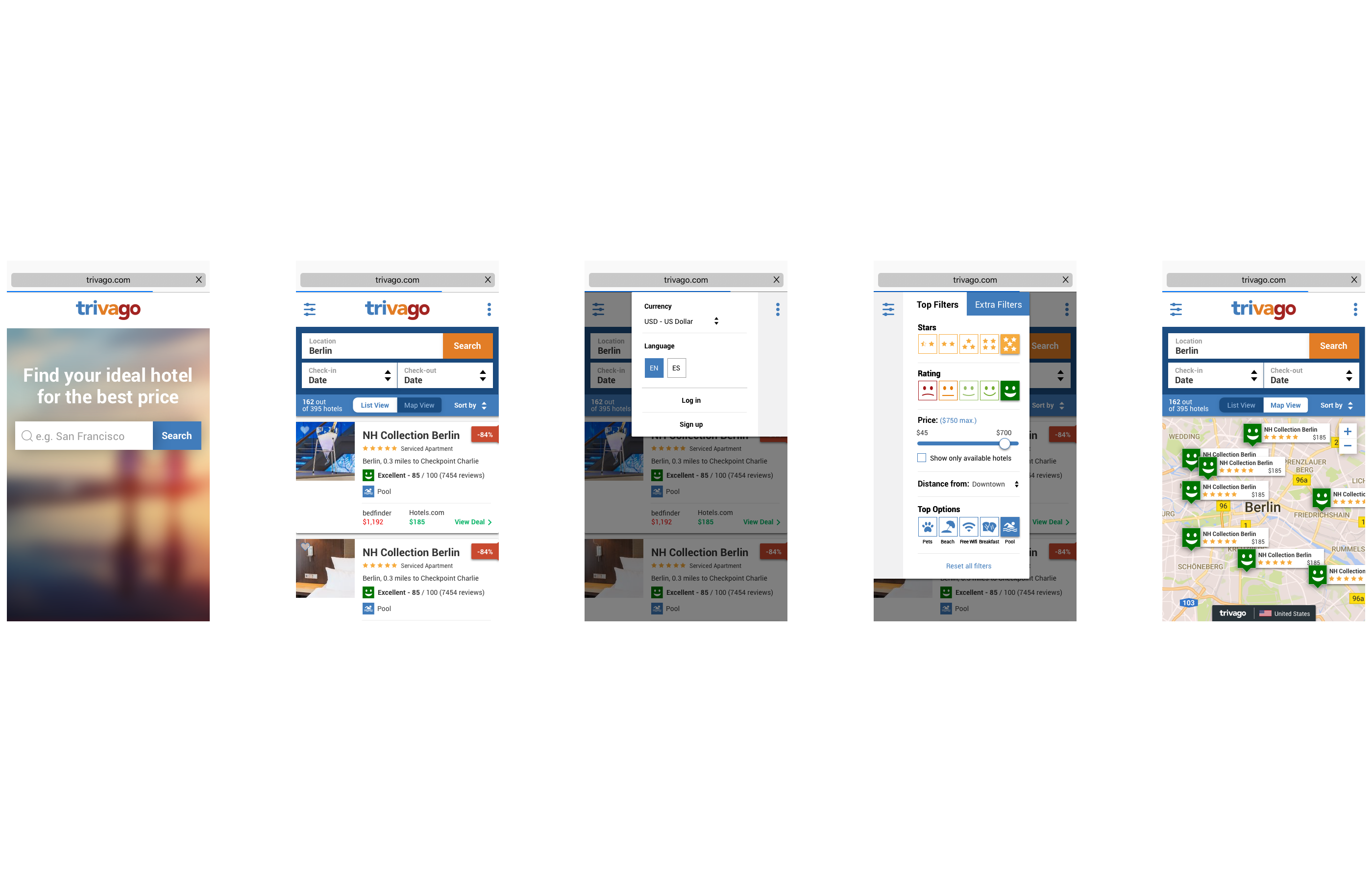
• Delivered a fully responsive map interface, ensuring a consistent and intuitive experience across desktop, tablet, and mobile devices.
• Improved navigation efficiency and spatial clarity, enabling users to explore locations and compare options with less cognitive effort.
• Established a unified visual and interaction language for Trivago’s map experience, aligning UX, UI, and interaction design principles.
• Enhanced decision-making confidence for travelers, transforming complex spatial data into clear, actionable insights.
• Optimized performance and usability at scale, supporting high information density without compromising responsiveness or visual hierarchy.
Technology and Skills
Cloud Solutions, Product Strategy, User Experience, Interaction Design, Art Direction